
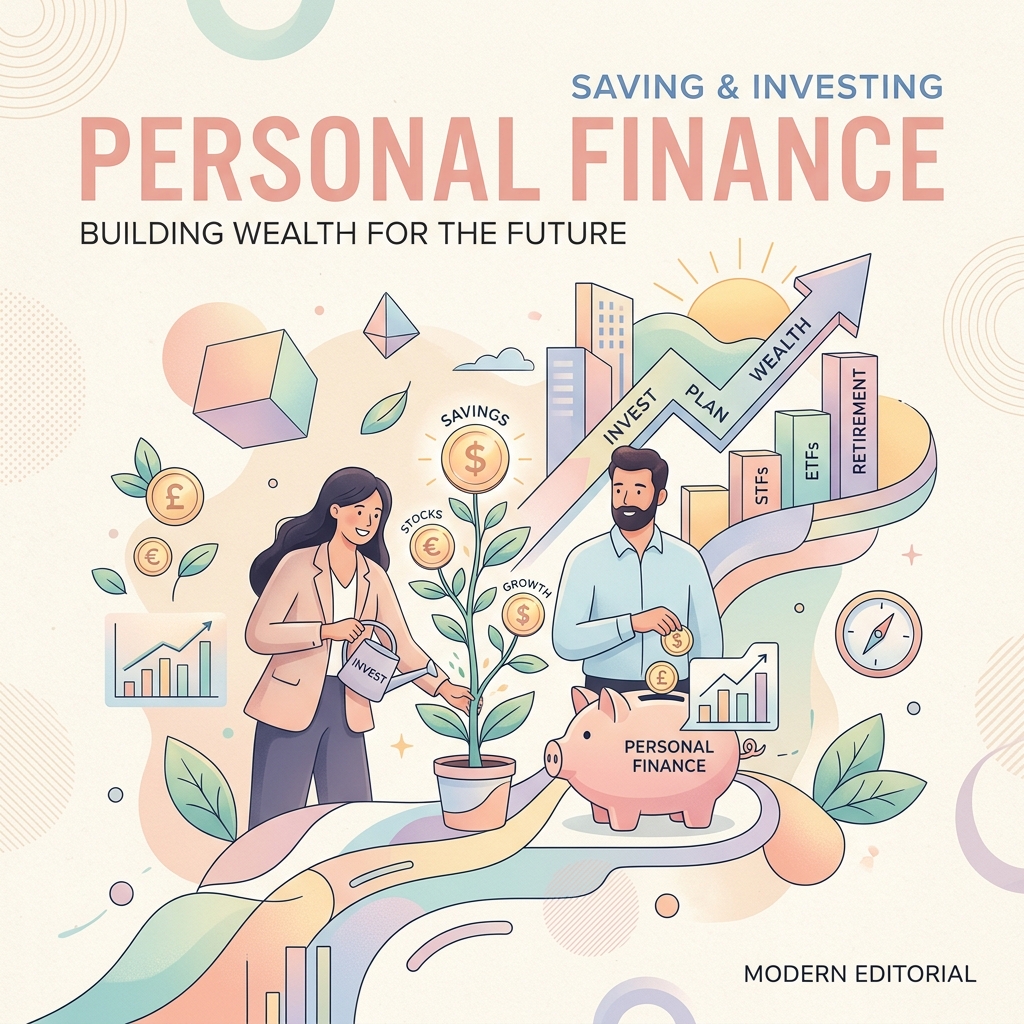
Introduction
The good news is that financial success is not reserved for high earners or investment experts. In most cases, building wealth comes down to developing strong financial habits, making informed decisions, and remaining consistent over time.
Whether your goal is to save more money, eliminate debt, start investing, buy a home, or achieve financial independence, understanding the fundamentals of personal finance can help you take control of your financial future.
In this guide, you'll learn the key principles of money management, including budgeting, saving, investing, debt reduction, income growth, and long-term financial planning. These are the same principles used by financially successful individuals to build security and wealth over time.
Quick Answer: What Is Personal Finance?
Personal finance is the process of managing your income, expenses, savings, investments, and financial goals.
Strong personal finance habits can help you:
- Build wealth over time.
- Reduce financial stress.
- Avoid unnecessary debt.
- Prepare for emergencies.
- Achieve financial independence.
- Reach major life goals more easily.
Simply put, personal finance is about making your money work for you rather than constantly working for money.
Key Takeaways & Roadmap
- Create a realistic budget before focusing on investing.
- Build an emergency fund covering at least 3–6 months of expenses.
- Eliminate high-interest debt as quickly as possible.
- Invest consistently rather than trying to time the market.
- Develop multiple income streams when possible.
- Focus on long-term financial growth rather than short-term gains.
Personal Finance Roadmap for 2026
| Financial Goal | Recommended Action |
|---|---|
| Stop living paycheck to paycheck | Create a monthly budget |
| Build financial security | Start an emergency fund |
| Grow your wealth | Invest consistently |
| Reduce financial stress | Pay off high-interest debt |
| Increase income | Develop additional income streams |
| Achieve financial independence | Follow a long-term financial plan |
1. How to Create a Monthly Budget That Actually Works
A budget is often misunderstood. Many people think budgeting means restricting spending and eliminating everything enjoyable from their lives. In reality, a budget is simply a plan for your money.
Without a budget, it becomes difficult to know where your income is going each month. Small purchases, subscriptions, dining out, and impulse spending can quickly add up without you realizing it.
The first step is calculating your monthly income after taxes. Once you know how much money you have available, list all of your expenses and divide them into two categories:
Fixed Expenses
These expenses remain relatively stable every month:
- Rent or mortgage payments
- Insurance
- Loan repayments
- Utilities
- Subscription services
Variable Expenses
These expenses change from month to month:
- Groceries
- Entertainment
- Dining out
- Shopping
- Travel
The 50/30/20 Rule
One of the most popular budgeting methods is the 50/30/20 rule:
| Category | Percentage |
|---|---|
| Needs | 50% |
| Wants | 30% |
| Savings & Investments | 20% |
This framework helps create balance between enjoying life today and preparing for the future.
Common Budgeting Mistakes
Avoid these common errors:
- Not tracking expenses.
- Setting unrealistic limits.
- Ignoring annual expenses.
- Forgetting emergency savings.
- Failing to review the budget regularly.
A budget is not something you create once and forget. It should evolve as your income, expenses, and financial goals change.
Why Budgeting Matters: People who consistently follow a budget often experience less financial stress, stronger savings habits, and greater confidence when making financial decisions. Budgeting is not about restriction. It is about giving every dollar a purpose.
2. How Much Money Should You Save Each Month in 2026?
One of the most common personal finance questions is surprisingly simple: How much money should I save every month?
The answer depends on your income, expenses, financial goals, and current situation. However, one principle remains true regardless of how much you earn: saving consistently is more important than saving large amounts occasionally.
Many people believe they need a high salary before they can start saving. In reality, building wealth often begins with developing the habit of saving, even if the amount is relatively small.
The 20% Rule
A popular recommendation among financial planners is to save at least 20% of your monthly income. This percentage can be divided into multiple categories:
- Emergency Fund: 10%
- Investments: 5%
- Long-Term Goals: 5%
For example, if you earn $3,000 per month after taxes, a 20% savings rate would equal $600 per month. While not everyone can immediately save 20%, it provides a useful target to work toward over time.
Build an Emergency Fund First
Before focusing heavily on investing, most experts recommend creating an emergency fund. An emergency fund is money specifically reserved for unexpected situations, including medical expenses, car repairs, home maintenance, job loss, or family emergencies. Without emergency savings, many people are forced to rely on credit cards or loans when unexpected costs arise.
How Much Should You Have?
- Stable job: 3 months of expenses
- Variable income: 6 months of expenses
- Self-employed: 6–12 months of expenses
If your monthly expenses are $2,000, a six-month emergency fund would be approximately $12,000. This may seem overwhelming, but remember that emergency funds are usually built gradually over time.
Why Saving Matters More Than Income
Many people assume that higher income automatically leads to greater wealth. Unfortunately, this is not always true. Some high-income earners save very little because their spending increases alongside their salary. This phenomenon is known as lifestyle inflation.
For example: Person A earns $50,000 and saves 20%. Person B earns $100,000 and saves 5%. Despite earning twice as much, Person B may build wealth much more slowly. Your savings rate often matters more than your income level.
Automate Your Savings
One of the easiest ways to save consistently is automation. Instead of waiting until the end of the month to save whatever remains, transfer money into savings immediately after receiving your paycheck. This strategy is often called "Pay Yourself First."
Common Saving Mistakes
- Saving Without a Goal: People are more likely to save consistently when they know exactly what they are saving for.
- Keeping All Your Money in Cash: Emergency funds should remain accessible, but long-term savings often benefit from being invested.
- Waiting for the "Perfect Time": Starting today—even with a small amount—is usually better than waiting.
How Saving Helps Build Wealth: Saving money is not the final goal. It is the foundation that makes every other financial goal possible. It gives you more choices, reduces financial stress, and creates a safety net.
3. How to Start Investing for Beginners in 2026
Once you have created a budget and built an emergency fund, the next step toward financial growth is investing.
Many people delay investing because they believe they need thousands of dollars to get started or that they need to be financial experts. The truth is that modern investing has never been more accessible. The biggest mistake beginners make is waiting too long.
Why Investing Is Important
Saving money protects your financial security, but investing helps your money grow. One of the biggest financial risks today is inflation. Over time, inflation reduces the purchasing power of cash. Investing allows your money to potentially grow faster than inflation.
| Saving | Investing |
|---|---|
| Lower risk | Higher risk |
| Easy access to money | Long-term focus |
| Suitable for emergencies | Suitable for wealth building |
| Lower returns | Potentially higher returns |
Understanding Compound Growth
One of the most powerful concepts in personal finance is compound growth. Compounding occurs when your investment earnings begin generating additional earnings. Over decades, this process can dramatically increase wealth. This is why financial experts often say that time in the market is more important than timing the market.
Best Investments for Beginners
- Index Funds: Track a market index, such as the S&P 500. Benefits include low fees, broad diversification, and simplicity.
- Exchange-Traded Funds (ETFs): Function similarly to index funds but trade on stock exchanges like individual stocks.
- Individual Stocks: Buying individual stocks can potentially generate higher returns, but it also involves greater risk.
The Power of Consistent Investing
Instead of waiting for the perfect moment, many experts recommend Dollar-Cost Averaging (DCA). With DCA, you invest a fixed amount on a regular schedule regardless of market conditions. This strategy reduces emotional decision-making and helps build consistency over time.
Common Investing Mistakes
- Trying to get rich quickly.
- Investing without research.
- Ignoring diversification.
- Letting emotions control decisions.
Key Takeaways: Start investing as early as possible. Focus on long-term growth rather than short-term gains. Consider diversified investments such as index funds and ETFs. Invest consistently using Dollar-Cost Averaging.
4. How to Pay Off Debt Faster: 7 Proven Strategies
Debt is one of the biggest obstacles to financial freedom. For millions of people, high-interest debt—especially credit card debt—creates a cycle that becomes increasingly difficult to escape.
Every dollar spent on interest is a dollar that cannot be invested, saved, or used to improve your financial situation. For example, a credit card charging 20% interest effectively requires your investments to earn more than 20% annually just to break even.
Signs Your Debt Is Becoming a Problem
- You only make minimum monthly payments.
- You regularly use credit cards to cover basic expenses.
- A large percentage of your income goes toward debt payments.
- Your debt continues to increase each month.
Strategy #1: List Every Debt You Owe
Create a simple table with the Debt Type, Balance, Interest Rate, and Minimum Payment. This helps you identify which debts should be prioritized.
Strategy #2: Use the Avalanche Method
The Avalanche Method focuses on paying off the debt with the highest interest rate first. Continue making minimum payments on all debts. Put any extra money toward the highest-interest debt. This mathematically saves the most money in interest.
Strategy #3: Use the Snowball Method
The Snowball Method focuses on paying off the smallest balance first. This creates quick wins, builds momentum, and increases motivation.
Strategy #4: Stop Creating New Debt
Paying off debt while continuing to accumulate new debt is like trying to fill a bucket with a hole in the bottom. Avoid unnecessary credit card spending and focus on living within your means.
Strategy #5: Increase Your Income
Cutting expenses is helpful, but increasing income often has a much larger impact. Options include freelancing, tutoring, selling digital products, or consulting. Even an additional $200–$500 per month can dramatically accelerate debt repayment.
Strategy #6: Reduce Unnecessary Expenses
Review your recent spending and identify areas where temporary reductions are possible (subscriptions, dining out, impulse purchases).
Strategy #7: Build an Emergency Fund While Paying Debt
Even a small emergency fund of $500–$1,000 can provide protection while you continue paying down balances. This helps break the cycle of borrowing.
Key Takeaways: The Avalanche Method saves the most money. The Snowball Method provides stronger motivation. Increasing income accelerates repayment faster than cutting expenses alone.
5. 7 Ways to Create Multiple Streams of Income in 2026
Relying entirely on a single source of income is a common financial mistake. If that income suddenly disappears, your financial situation can change overnight.
Creating multiple streams of income offers increased financial security, faster debt repayment, and more money available for investing.
- Freelancing: One of the fastest ways to generate additional income if you have marketable skills (writing, design, programming).
- Investing in Dividend Stocks: A strategy that can eventually create a stream of passive income.
- Creating Digital Products: E-books, courses, and templates can be sold repeatedly without additional production costs.
- Starting a Blog or Niche Website: Generate revenue through display ads, affiliate marketing, and sponsored content.
- Selling Products Online: E-commerce (print-on-demand, dropshipping).
- Real Estate Investments: Provides rental income and property appreciation.
- Building a Personal Brand: YouTube channels, newsletters, and online communities can open doors to multiple revenue streams.
Active vs Passive Income
Active Income requires ongoing work (jobs, freelancing). Passive Income requires little ongoing work once established (dividends, digital products). Most passive income streams actually begin as active projects before becoming automated.
6. How to Create a Long-Term Financial Plan That Actually Works
Building wealth is not about making one perfect financial decision. It is about creating a system that consistently moves you closer to your goals over time.
Step 1: Define Your Financial Goals
Specific goals create measurable targets and make it easier to track progress. (e.g., "I want to save $10,000 for a house deposit within three years.")
Step 2: Divide Goals Into Time Horizons
- Short-Term (1–3 Years): Emergency fund, debt repayment.
- Medium-Term (3–10 Years): Home purchase, business startup.
- Long-Term (10+ Years): Retirement, financial independence.
Step 3: Track Your Net Worth
Net Worth = Assets (savings, investments, property) – Liabilities (debt, loans). Tracking net worth provides a clear picture of your financial progress over time.
Step 4: Review Your Finances Regularly
A financial plan should never remain static. Conduct a personal financial review at least once per year.
Step 5: Focus on Long-Term Growth
Financial success is usually built over decades, not weeks. The most successful investors follow a simple strategy: Save consistently, invest consistently, stay diversified, and remain patient.
The Power of Compound Growth: The earlier you start, the more powerful compounding becomes. Investing $500/month at 8% annual return yields over $680,000 after 30 years.
Final Thoughts: Building Wealth in 2026 and Beyond
Personal finance is not about becoming rich overnight. It is about making smart financial decisions consistently over time.
While each strategy is valuable individually, their true power comes from combining them into a complete financial system. The reality is that financial success rarely happens because of a single decision. It is usually the result of hundreds of small decisions made consistently over many years.
The Most Important Financial Lesson
If there is one lesson to remember from this guide, it is this: Start now. Many people spend years waiting for the perfect time to save, invest, start a business, or improve their finances. The perfect time rarely arrives. The sooner you begin, the more time you have to benefit from compound growth, financial discipline, and long-term planning.
Financial Success Is Personal. It is also important to remember that personal finance is exactly that: personal.