Best AI Tools for Daily Life
Published May 12, 2026. Last updated May 24, 2026. Estimated reading time: 13 minutes.
If you want to use AI as a practical everyday helper for planning, learning, writing, and decisions, AI can help you move faster, compare options, and build a repeatable workflow. The important part is choosing the right tool for the job instead of trying to force one app to do everything.

The real problem this guide solves
The reason this topic matters is not that AI tools for daily life are trendy. The real problem is using AI for ordinary decisions like planning, cooking, writing, errands, learning, and organization. A useful guide should help you make a decision faster while also showing what could go wrong.
My editorial approach is to treat ChatGPT, Google, Microsoft, Anthropic as practical options, not magic answers. I look for workflow fit, learning curve, verification needs, pricing transparency, and the amount of work left after the first output. That is usually where the difference between a good-looking tool and a genuinely useful tool becomes obvious.
How to compare the options
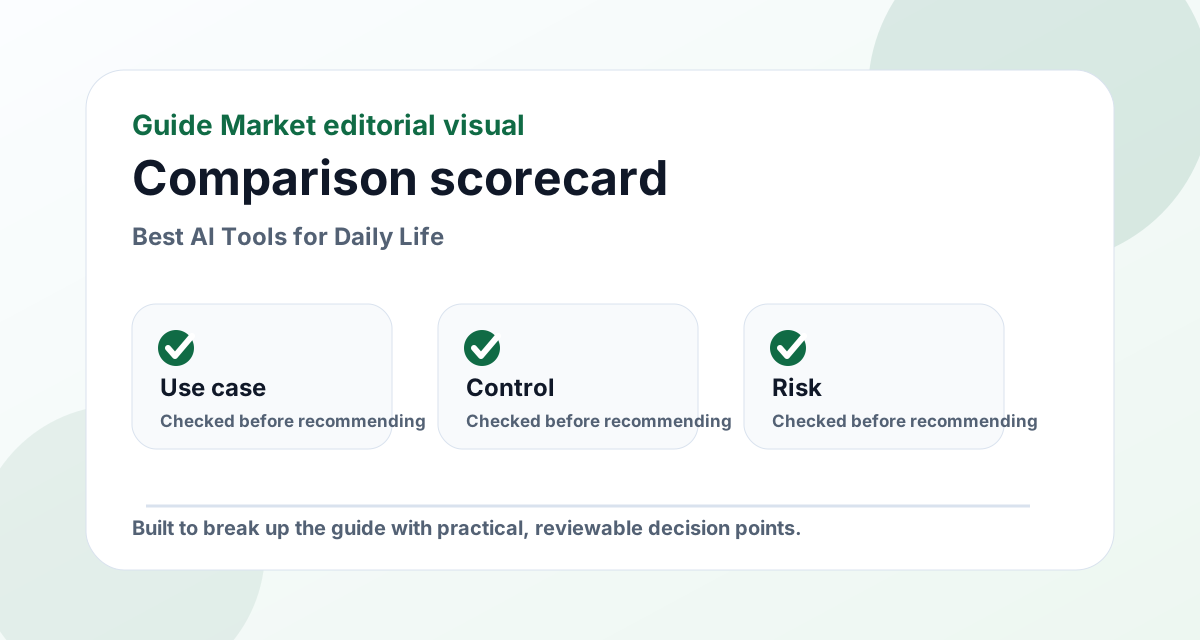
| Criterion | Why it matters | What I would check |
|---|---|---|
| Best fit | A tool or asset should solve a specific problem, not simply look impressive. | Use it against one realistic scenario: a busy weekday where the reader needs a meal idea, travel check, email draft, and task plan before noon. |
| Control | You need to edit, verify, export, or adapt the result. | Check whether the output can be changed without starting over. |
| Risk | Every option has a downside: cost, accuracy, privacy, volatility, complexity, or lock-in. | Write the failure case before you commit. |
| Long-term usefulness | The best choice should still be useful after the novelty fades. | Ask whether you would use it weekly, monthly, or only once. |
Pros and cons
What works well
- Speeds up the first draft or plan.
- Helps compare options without starting from a blank page.
- Can turn a messy task into a repeatable workflow.
What to watch
- Output can sound confident while still needing verification.
- Paid plans are not worth it unless they remove a real bottleneck.
- Generic prompts produce generic answers, so the brief matters.
Practical example workflow
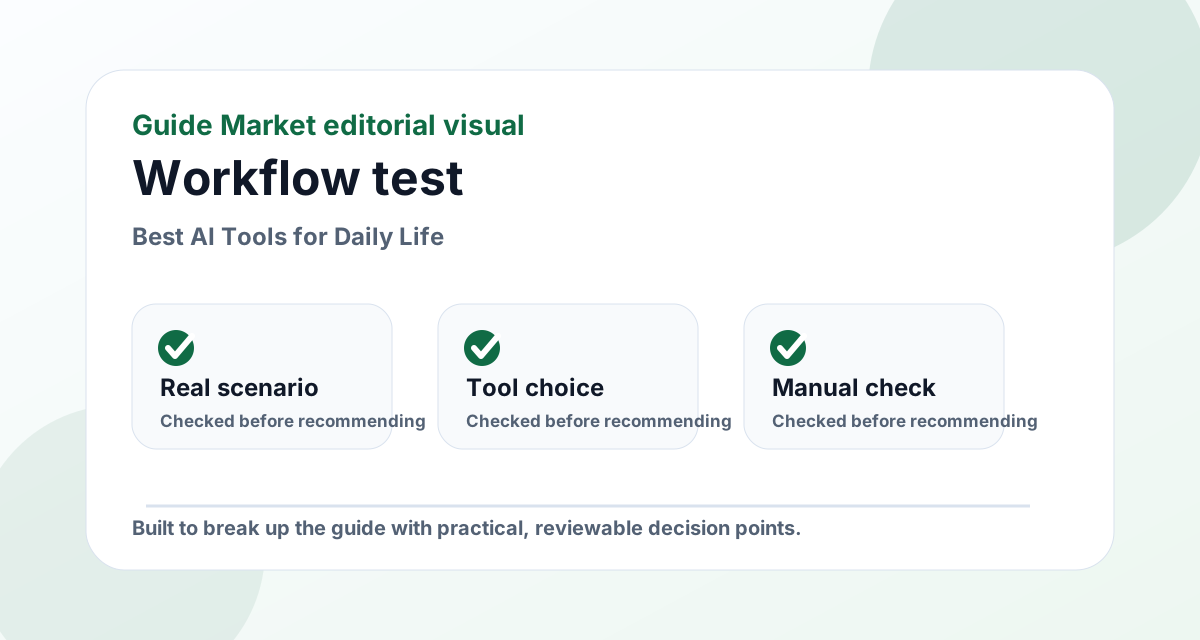
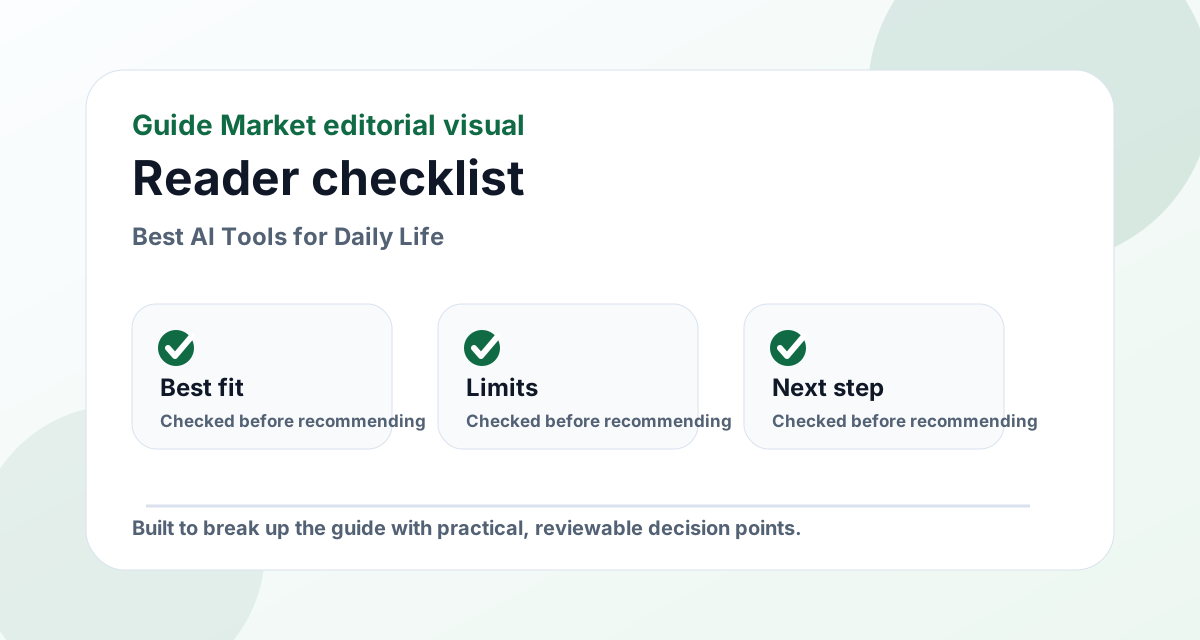
For a realistic test, I would start with this situation: a busy weekday where the reader needs a meal idea, travel check, email draft, and task plan before noon. That is specific enough to reveal whether the recommendation actually helps. A vague test produces a vague conclusion.
Step one is to define the outcome. Step two is to compare two or three options using the same task. Step three is to check what must be verified manually. Step four is to save the winning workflow as a reusable checklist. This matters because a one-time good answer is less valuable than a process you can repeat.
My preferred setup here is ChatGPT for flexible help, Google tools for current information, Microsoft Copilot for work context, and Claude for careful writing. I would not add more options until that workflow hits a clear limit. More tools can create more decisions, and more decisions often reduce consistency.
Common mistakes
- Choosing the most popular option without checking whether it fits the actual task.
- Accepting the first output or first recommendation without editing, testing, or verifying it.
- Paying for multiple subscriptions before proving that one workflow saves time or improves quality.
- Ignoring privacy, source quality, pricing changes, or hidden limitations.
- Using the same generic prompt, template, or decision rule for every situation.
Final recommendation
If I had to make a practical recommendation, I would start with ChatGPT for flexible help, Google tools for current information, Microsoft Copilot for work context, and Claude for careful writing. That recommendation is not based on hype; it is based on which option gives a useful first result while still leaving the reader in control.
The best decision is the one you can explain clearly after the tab is closed. If you cannot explain why you chose an option, what its limitation is, and what you will verify next, keep researching before committing time or money.
FAQs
What is the best AI tools for daily life option for beginners?
For most beginners, the best choice is the tool that solves one clear problem with the least setup. I would start with the option named in the recommendation above, then add specialist tools only when a real bottleneck appears.
Are free plans enough?
Often, yes. Free plans are useful for testing workflow fit. Upgrade only when the paid feature removes a specific limit such as exports, team access, history, integrations, or higher usage.
Can these tools replace human judgment?
No. They can speed up drafts, comparisons, and planning, but the final decision still needs context, fact-checking, and personal standards. This is especially important for school, money, health, legal, or business decisions.
How should I compare tools fairly?
Use the same task for every tool. Give each one the same brief, compare output quality, editing control, price, privacy, and how much work remains after the AI response.
Quick answer
The best choice depends on your goal. ChatGPT is usually the easiest place to start, Google is useful when you want a more focused experience, Microsoft can help with comparison or structure, and Anthropic is a strong supporting option for custom planning. For most readers, the smartest workflow is not one tool only. It is a simple stack: one tool for research, one for planning, one for execution, and one for review.
Comparison table
| Tool | Best use case | Why it matters |
|---|---|---|
| ChatGPT | daily use | Best starting point for most people. |
| organization | Strong specialist option for focused workflows. | |
| Microsoft | recipes | Useful when you want automation or comparison. |
| Anthropic | travel | Flexible support tool when you need custom prompts and planning. |
What to look for before choosing
Before you sign up for any AI tool, define the result you actually want. A vague goal creates vague output. A precise goal gives the software something useful to optimize for. In this category, the most important criteria are ease of use, quality of suggestions, customization, price transparency, export options, and how well the tool fits into your existing routine.
Think about frequency too. A tool you use every day can be worth learning deeply, while a tool you use once a month should feel simple immediately. The best AI products reduce friction. They should help you make faster decisions, not create a second job where you manage prompts, settings, subscriptions, and dashboards.
Privacy is another important factor. Many people paste sensitive information into AI systems without thinking. When you use these tools for daily ai, avoid sharing private documents, passwords, medical data, financial account details, or personal information you would not want stored by a third-party service. Read the tool's privacy policy and use built-in privacy controls when available.
ChatGPT
ChatGPT can be a strong option when your main goal is daily use. The advantage of using it in this workflow is that it gives you a structured starting point instead of forcing you to begin from a blank page. That matters because most people do not fail because they lack information. They fail because they have too many scattered options and no clear next step.
Use ChatGPT with a specific prompt or setup. Tell it your goal, your constraints, your level, your deadline, and what you have already tried. Then ask for a plan with steps, alternatives, and tradeoffs. If the output feels generic, do not accept it immediately. Ask for a version that is more realistic, cheaper, faster, easier, more advanced, or better suited to your situation.
The limitation is that AI can sound confident even when it is incomplete. Treat the output as a draft, not as final truth. Check important details, compare options, and use your judgment. This is especially important when money, health, education, travel, or career decisions are involved. The best results come from a loop: generate, review, adjust, and verify.
Google can be a strong option when your main goal is organization. The advantage of using it in this workflow is that it gives you a structured starting point instead of forcing you to begin from a blank page. That matters because most people do not fail because they lack information. They fail because they have too many scattered options and no clear next step.
Use Google with a specific prompt or setup. Tell it your goal, your constraints, your level, your deadline, and what you have already tried. Then ask for a plan with steps, alternatives, and tradeoffs. If the output feels generic, do not accept it immediately. Ask for a version that is more realistic, cheaper, faster, easier, more advanced, or better suited to your situation.
The limitation is that AI can sound confident even when it is incomplete. Treat the output as a draft, not as final truth. Check important details, compare options, and use your judgment. This is especially important when money, health, education, travel, or career decisions are involved. The best results come from a loop: generate, review, adjust, and verify.
Microsoft
Microsoft can be a strong option when your main goal is recipes. The advantage of using it in this workflow is that it gives you a structured starting point instead of forcing you to begin from a blank page. That matters because most people do not fail because they lack information. They fail because they have too many scattered options and no clear next step.
Use Microsoft with a specific prompt or setup. Tell it your goal, your constraints, your level, your deadline, and what you have already tried. Then ask for a plan with steps, alternatives, and tradeoffs. If the output feels generic, do not accept it immediately. Ask for a version that is more realistic, cheaper, faster, easier, more advanced, or better suited to your situation.
The limitation is that AI can sound confident even when it is incomplete. Treat the output as a draft, not as final truth. Check important details, compare options, and use your judgment. This is especially important when money, health, education, travel, or career decisions are involved. The best results come from a loop: generate, review, adjust, and verify.
Anthropic
Anthropic can be a strong option when your main goal is travel. The advantage of using it in this workflow is that it gives you a structured starting point instead of forcing you to begin from a blank page. That matters because most people do not fail because they lack information. They fail because they have too many scattered options and no clear next step.
Use Anthropic with a specific prompt or setup. Tell it your goal, your constraints, your level, your deadline, and what you have already tried. Then ask for a plan with steps, alternatives, and tradeoffs. If the output feels generic, do not accept it immediately. Ask for a version that is more realistic, cheaper, faster, easier, more advanced, or better suited to your situation.
The limitation is that AI can sound confident even when it is incomplete. Treat the output as a draft, not as final truth. Check important details, compare options, and use your judgment. This is especially important when money, health, education, travel, or career decisions are involved. The best results come from a loop: generate, review, adjust, and verify.
Prompts you can copy
Starter prompt: I want help with daily use, organization, recipes, travel, study, productivity, personal automation. Ask me the most important questions first, then create a practical plan with tools, steps, mistakes to avoid, and a simple checklist.
Comparison prompt: Compare ChatGPT, Google, Microsoft, Anthropic for my situation. Use a table with strengths, weaknesses, price considerations, learning curve, and best use case. Finish with one recommendation for a beginner and one for an advanced user.
Improvement prompt: Review this plan and make it more realistic. Reduce unnecessary steps, identify risks, and give me a version I can start today in less than 30 minutes.