How Exchange Rates Affect Your Money (and the Fees You Miss)
Why currencies rise and fall, how that reaches your shopping, travel and savings, and how to stop paying hidden conversion fees on cards abroad.
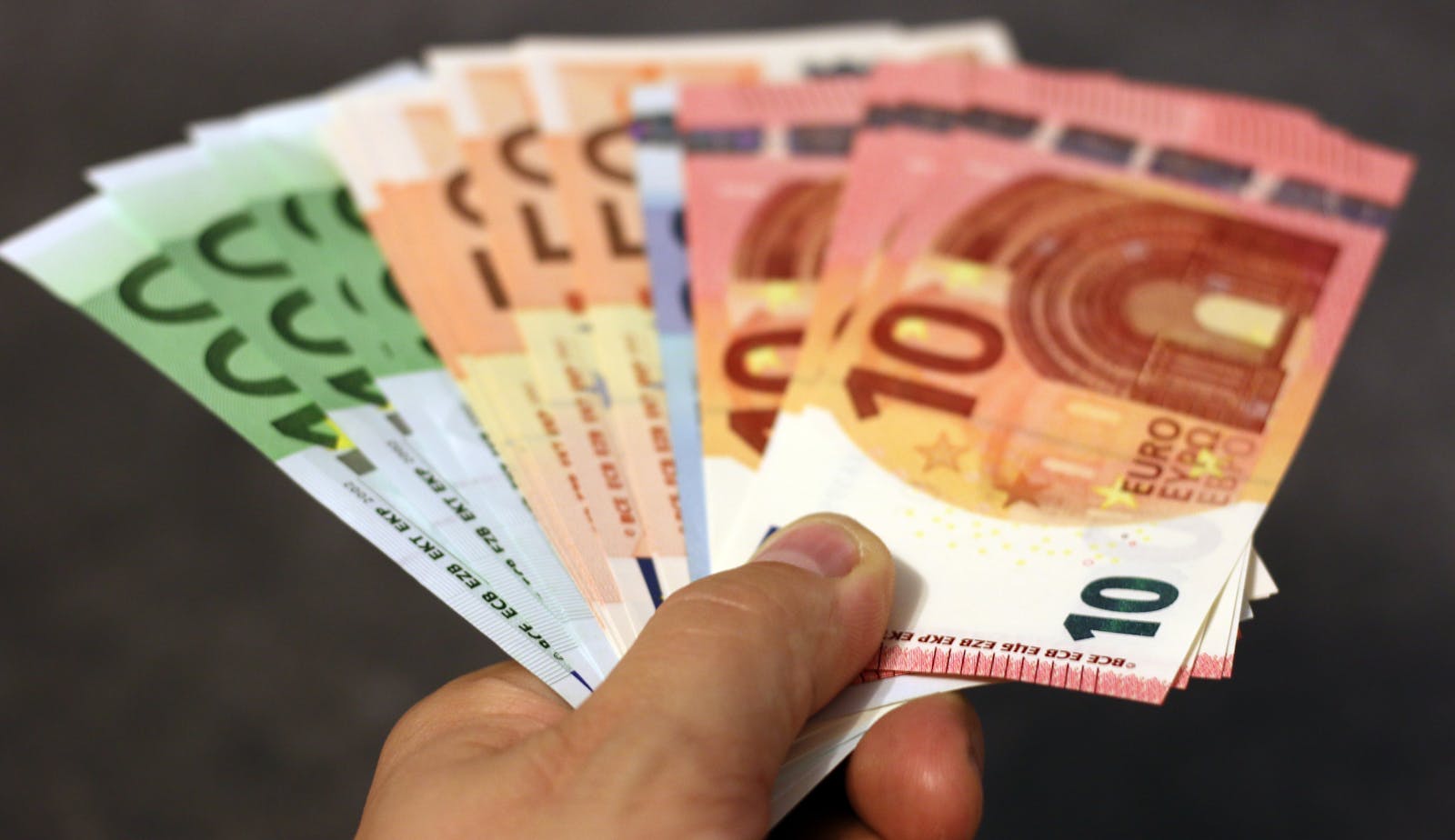
You pay for dinner in Lisbon, the waiter hands you the card machine, and the screen asks a question nobody prepared you for: pay in euros or in dollars? A week later a parcel from a Japanese shop costs a little more than the price you saw in the basket. Your cousin who earns in pounds says her savings "went up" even though she did nothing. All three are the same thing at work. An exchange rate is just the price of one currency in another, and like any price it moves.
Most people never think about that price until it bites. Yet it quietly sets what imported goods cost, how far a holiday budget stretches, and what a salary or a savings pot in a foreign currency is worth at home. The movements themselves are mostly outside your control. The fees stacked on top of them are not, and on a single trip they can easily cost more than the currency move itself.
This guide explains what actually pushes exchange rates around, shows with official data how much they moved in recent years, and then gets practical: where the hidden costs sit, a worked example of a card payment abroad, and a checklist you can use before your next trip or foreign purchase.
What an exchange rate actually is
An exchange rate tells you how many units of one currency you need to buy one unit of another. The euro–dollar rate is usually quoted as dollars per euro: if the rate is 1.12, one euro costs $1.12. The yen is usually quoted the other way round, as yen per dollar. That quirk trips people up. When the euro–dollar number goes up, the euro is getting stronger; when the yen–dollar number goes up, the yen is getting weaker.
The rate you see on the news is the wholesale or "mid-market" rate, the midpoint between what big banks pay and charge each other for very large sums. Central banks publish reference versions of it. The European Central Bank publishes euro reference rates on working days, and the US Federal Reserve publishes daily rates in its H.10 release and annual averages in its G.5A release.
Here is the part worth remembering: almost no ordinary person ever gets that rate. Every bank, card, exchange kiosk and payment app adds a margin somewhere. Sometimes it's an explicit fee, sometimes it's buried in a worse rate, sometimes both. Understanding the mid-market rate matters mostly because it gives you a yardstick to measure that margin.
Most major currencies, including the dollar, euro, pound and yen, float. Their value is set in markets rather than fixed by government. The ECB, for example, says plainly that the exchange rate is not a policy target, although it watches the rate closely because a stronger or weaker euro changes import prices and therefore inflation.
Why currencies rise and fall
Day to day, a single data release can move a currency. Over months and years, a handful of forces do most of the work.
Interest rates and what markets expect next
Money tends to flow toward places where it earns more, adjusted for risk. If one central bank raises interest rates while another holds them low, deposits and bonds in the first currency become more attractive, and investors need that currency to buy them. Demand rises, and so does the price.
What matters is less the current rate than the expected path. Markets price in decisions before they happen, which is why a currency can fall on the day a central bank raises rates: the rise was smaller than traders had bet on. The gap between US and Japanese interest rates in 2022 and 2023, when the Federal Reserve was raising rates quickly and the Bank of Japan kept its policy rate at or below zero, is a widely cited reason for the yen's slide you can see in the chart further down.
Inflation and purchasing power
Over long periods, a currency whose prices rise faster tends to lose value against one with steadier prices. If a basket of goods gets 10% more expensive in one country and stays flat in another, something has to give, and over years the exchange rate usually does part of the adjusting. Economists call the long-run version of this idea purchasing power parity. It is a poor guide to next month and a reasonable guide to the next decade.
Trade and the current account
Countries that sell more abroad than they buy generate steady demand for their currency, because foreign buyers have to pay for those exports. Big energy importers see the reverse when oil and gas prices jump: they need more foreign currency to pay their bills.
Risk and the search for safety
When markets panic, money runs toward currencies seen as safe: the US dollar above all, and at times the Swiss franc and the yen. During a crisis the dollar can strengthen even when the trouble started in the United States, simply because so much of the world's borrowing and trade is priced in it.
| Driver | What typically happens | How quickly it shows up |
|---|---|---|
| Higher interest rates (or expected rises) | Currency tends to strengthen as savers and investors buy it | Days to months, often before the decision |
| Persistently higher inflation | Currency tends to weaken over time | Years |
| Large trade surplus | Steady support for the currency | Months to years |
| Energy price spike for an importer | Currency tends to weaken | Weeks to months |
| Global panic or recession fears | Money flows into perceived safe havens, often the dollar | Hours to days |
Treat that table as tendencies, not laws. Each force can overwhelm the others, and plenty of professional forecasters get the direction wrong. That's the honest reason this guide spends more time on fees than on predictions: you can't reliably time a currency, but you can almost always stop overpaying to convert it.
How much rates really move: the official numbers
It helps to see real movements rather than talk about them in the abstract. The Federal Reserve's G.5A annual release publishes yearly averages of daily exchange rates. Averages smooth out the drama of individual days, so the true swings within each year were larger than these numbers suggest.
| 2022 | 1.05USD |
|---|---|
| 2023 | 1.08USD |
| 2024 | 1.08USD |
| 2025 | 1.13USD |
Higher means a stronger euro. Annual averages of daily rates. · Source: Federal Reserve, G.5A Foreign Exchange Rates (annual)
On those figures the euro averaged about 7% more in dollar terms in 2025 than in 2022. For an American planning a European holiday, the same €3,000 trip cost roughly $3,160 at the 2022 average rate and roughly $3,392 at the 2025 average, before any fees. For a European selling to American customers, the shift worked the other way: each dollar of revenue bought fewer euros.
| 2022 | 131.46JPY |
|---|---|
| 2023 | 140.5JPY |
| 2024 | 151.46JPY |
| 2025 | 149.57JPY |
Higher means a weaker yen. Annual averages of daily rates. · Source: Federal Reserve, G.5A Foreign Exchange Rates (annual)
The yen tells a bigger story. Between 2022 and 2024 the annual average climbed by about 20 yen per dollar, a loss of roughly 13% of the yen's value against the dollar. That made Japan noticeably cheaper for visitors paid in dollars and made imported food and fuel more expensive for households in Japan.
These are not crisis-era numbers. They are the ordinary background noise of floating currencies, and they're large enough to matter for anyone who spends, earns or saves across borders. For live daily figures, the ECB's euro reference rates are free and updated every working day; at the time of writing the reference rate for 6 November 2026 was 1.1165 dollars per euro.
How exchange rates reach ordinary people
You don't need to hold foreign currency to be affected. Exchange rates seep into everyday life through several channels, some obvious and some easy to miss.
Prices in the shops at home
A large share of what you buy is imported or made with imported parts and energy. When your currency weakens, importers pay more for the same goods. They don't pass all of it on, and not straight away, because contracts are often fixed months ahead and companies absorb some of the hit. But over time a weaker currency nudges up prices for electronics, clothing, fuel and food. The ECB's explainer makes the general point that a stronger euro lowers import prices, which is exactly why central banks watch the exchange rate even when they don't target it.

Travel
This is where most people feel exchange rates directly. A strong home currency makes a trip abroad cheaper; a weak one makes it dearer. The effect is easy to see in the yen chart above.
Shopping online from foreign sites
Buying from a shop abroad usually means one of two things. Either the site charges you in its own currency and your card converts it, or it shows you a price already converted into your currency. The second can look friendlier, but the conversion rate the shop picks may be worse than what your card would give you. On top of that come shipping, import duties or sales taxes depending on where you live, and any refund will be converted back at whatever the rate is on the day of the refund, which can leave you slightly out of pocket.
Salaries, pensions and savings in another currency
People who are paid in one currency and live in another carry exchange-rate risk every month: remote workers paid in dollars while living in Europe, pensioners who retired abroad, students funded from home. A 10% move in the currency is effectively a 10% pay rise or pay cut in local terms, without anyone changing the number on the payslip.

Savings work the same way. Money held in a foreign-currency account or in foreign investments gains or loses value at home as the rate moves, separately from any interest or investment return. That can be a deliberate choice if your future costs are in that currency, such as a planned move abroad. It's a gamble if it isn't. Holding foreign currency in the hope of a profit is speculation, and professional traders with far better tools lose money at it regularly.
The hidden costs of converting money
The exchange rate itself is the part you can't control. The cost of converting money is the part you can. It comes in four main forms.
The spread
A spread is the difference between the rate at which a provider buys a currency and the rate at which it sells it. Exchange counters and bureaux make most of their money here. The board might say "no commission", which is technically true: the fee is built into a rate several percent away from the mid-market rate. Airport and hotel counters are typically among the least competitive, because travellers there have few alternatives.
Foreign transaction fees on cards
Many debit and credit cards charge a percentage fee on any payment in a foreign currency, and on purchases from a foreign-based merchant even when the price is shown in your own currency. The fee is set by your card issuer, not the shop, and it's listed in your card's terms. Some cards, often marketed for travel, charge none. Cash withdrawals abroad can add a separate ATM fee from your bank, and sometimes another from the machine's owner.
Dynamic currency conversion at terminals and ATMs
This is the question from the Lisbon restaurant. Dynamic currency conversion (DCC) is a service in which the shop's card terminal or a foreign ATM offers to charge you in your home currency instead of the local one. It sounds helpful: you see a familiar number. In practice the conversion is done at a rate chosen by the merchant's payment provider, and it usually includes a markup that is larger than what your own card would have charged.
Card networks set rules for how DCC must be offered. Visa's consumer guidance says merchants and ATMs must show the amount in both currencies, the exchange rate and any markup, and must let you decide rather than choosing for you. Visa also says that declining conversion does not stop you from paying, and that if the required details are missing or you feel pushed, you should decline and report it to your card issuer. The European consumer organisation BEUC goes further and advises paying in the local currency, calling DCC a costly practice.

In the European Union, rules on cross-border payments now codified in Regulation (EU) 2021/1230 require that currency conversion charges be shown as a percentage markup over the latest ECB euro reference rates, so you can compare offers. Card issuers in the EU must also send you an electronic message with that markup after a card payment or withdrawal in another EU currency. Outside the EU, protections vary, so the burden of saying no falls more on you.
Ways to pay abroad compared
There is no single best method for everyone. What fits depends on your cards, where you're going and how much cash you need. The table below sets out the trade-offs in general terms; your own provider's terms decide the actual numbers.
| Method | Exchange rate you get | Typical extra costs | Watch out for |
|---|---|---|---|
| Card with no foreign transaction fee, charged in local currency | Card network rate, usually close to mid-market | Often none for purchases | ATM fees for cash; check the card really waives foreign fees |
| Standard card, charged in local currency | Card network rate | Issuer's foreign transaction fee (a percentage) | Fee may also apply to foreign websites priced in your currency |
| Any card, charged in your home currency (DCC) | Rate set by the merchant's provider, usually with a markup | Markup on every payment | Pressure at the till; screens nudging you toward home currency |
| ATM withdrawal in local currency | Card network rate | Bank's cash fee, machine owner's fee, possible credit card cash-advance interest | ATMs offering to "convert" for you: decline |
| Exchange counter or bureau | Counter's own buy/sell rate, often well off mid-market | Spread, sometimes commission | Airport and hotel counters; "no commission" signs |
| Cash ordered from your bank before you go | Bank's tourist rate | Spread, possibly delivery fee | Carrying large amounts; leftover cash converted back at a loss |
| Multi-currency account or travel money app | Often close to mid-market | Small conversion fee or weekend markup, depending on provider | Limits and fees vary; read the provider's pricing page |
A worked example: what a card payment abroad really costs
Numbers make the point better than adjectives. Suppose an American visitor pays for a €200 dinner in Portugal. To keep the arithmetic transparent we use the ECB reference rate of 1.1165 dollars per euro published for 6 November 2026, and assume three different ways of paying.
- Card with no foreign fee, paid in euros. The charge is converted at close to the reference rate: 200 × 1.1165 = $223.30.
- Card with a 3% foreign transaction fee, paid in euros. Same conversion, plus 3%: $223.30 × 1.03 = $230.00.
- Card charged in dollars through DCC with a 5% markup. The terminal uses a rate of 1.1165 × 1.05 = 1.1723 dollars per euro: 200 × 1.1723 = $234.47 (calculated with the unrounded rate). If that card also charges a foreign fee on foreign merchants, some issuers apply it here too, which would make it worse still.
The spread between the best and worst choice is $11.17 on one meal. Over a two-week trip with $3,000 of card spending, a 5% markup amounts to about $150, which is the price of another good dinner or a night in a guesthouse. The 3% and 5% figures here are assumptions for illustration. Your own card's fee is in its terms, and the DCC markup is the one the terminal must show you before you accept.
What you can and can't do about exchange rates
It's worth being honest about the limits. You can't make the dollar stronger before your holiday, and trying to time a big currency purchase on gut feeling is closer to betting than planning. What you can do falls into two groups.
The first is cutting conversion costs, which is reliable and repeatable. Picking a card without foreign fees, always paying in local currency, and avoiding counters with poor rates save money on every single transaction regardless of where the exchange rate goes.
The second is managing exposure when you have a real, known need. If you have to pay a deposit on a flat abroad in six months, or you'll be living off a foreign salary, spreading conversions over time rather than converting everything on one day reduces the risk of landing on a bad rate. It also reduces the chance of landing on a great one. That trade is usually worth making when the money matters.
For long-term savings, the cleaner rule is to hold most of your money in the currency you'll eventually spend it in. Currency diversification can make sense as part of a broader investment plan, but that's a decision to make deliberately, ideally with qualified advice, rather than something that happens because you left money sitting in a foreign account.
Checklist before you pay in another currency
Run through this before a trip, a large foreign purchase or a transfer abroad.
- Read your card's terms for the foreign transaction fee and the ATM fee. If both are high and you travel often, compare cards that waive foreign fees.
- Check the reference rate on the day from the ECB or a reputable source, so you can spot a bad rate instantly.
- Always choose the local currency at card terminals, ATMs, hotels and car hire desks, and decline any offer to "guarantee" a rate in your home currency.
- Watch the screen, not just the server. If the terminal has already been set to your home currency, ask for the transaction to be redone in local currency before you enter your PIN or tap.
- Avoid airport and hotel exchange counters except for small emergency amounts.
- On foreign websites, look for the option to pay in the seller's currency, and compare it with the converted price shown.
- Keep receipts and check your statement after the trip. If you were converted without being asked, or the markup wasn't shown, contact your card issuer.
- For big transfers, get two or three quotes and compare the final amount received, not the advertised fee.
Frequently asked questions
Should I pay in local currency or my home currency abroad?
In nearly all cases, pay in the local currency. Choosing your home currency triggers dynamic currency conversion at a rate set by the merchant's provider, which usually includes a markup. Visa's own guidance says you can decline conversion without affecting your ability to pay. The main exception is if your card charges a high foreign fee and the DCC markup shown on screen is lower, which is uncommon; checking the displayed rate tells you.
Why is the rate I get different from the one on the news?
The rate in the news is the mid-market rate between large banks. Retail providers add a margin, either as a fee, a worse rate, or both. Card network rates tend to be close to mid-market; exchange counters often are not. Comparing what you receive against the reference rate is the simplest way to see the margin.
Is it cheaper to exchange money before I travel or when I arrive?
It depends on where you exchange it, not when. Your bank's tourist rate at home and an exchange counter at your destination both include spreads, and airport counters on either end tend to be among the least competitive. For most travellers, paying by card in local currency and withdrawing modest amounts of cash from a bank ATM abroad costs less than either.
Do exchange rates affect me if I never travel?
Yes. Exchange rates feed into the prices of imported goods, fuel and many components inside products made at home. A weaker currency tends to push some prices up over time, and a stronger one tends to ease them. They also affect any savings, pensions or investments held in or exposed to other currencies.
Can I protect myself against exchange-rate swings?
You can reduce the risk, not remove it. Keep savings mainly in the currency you'll spend, convert large known amounts in stages, and for big transfers look at whether your provider offers a rate lock and what it costs. Anything beyond that, such as holding currencies to profit from moves, is speculation.
The takeaway
Exchange rates will keep moving, and for most people trying to guess their direction is wasted effort. The yen and euro charts above show that ordinary years bring swings of several percent, which is worth knowing when you budget a trip or weigh a job paid in another currency.
The money you can actually keep is in the conversion. Find out what your cards charge for foreign payments, choose the local currency every time a screen asks, and measure any rate you're offered against the day's reference rate. Those three habits cost nothing and pay off on every transaction abroad.
This article is general information, not personal financial advice.


