Index Funds Explained for Beginners: Fees, Risk and First Steps
What index funds and ETFs are, why a fraction of a percent in fees matters so much, how they compare with active funds, and how to start investing in one.
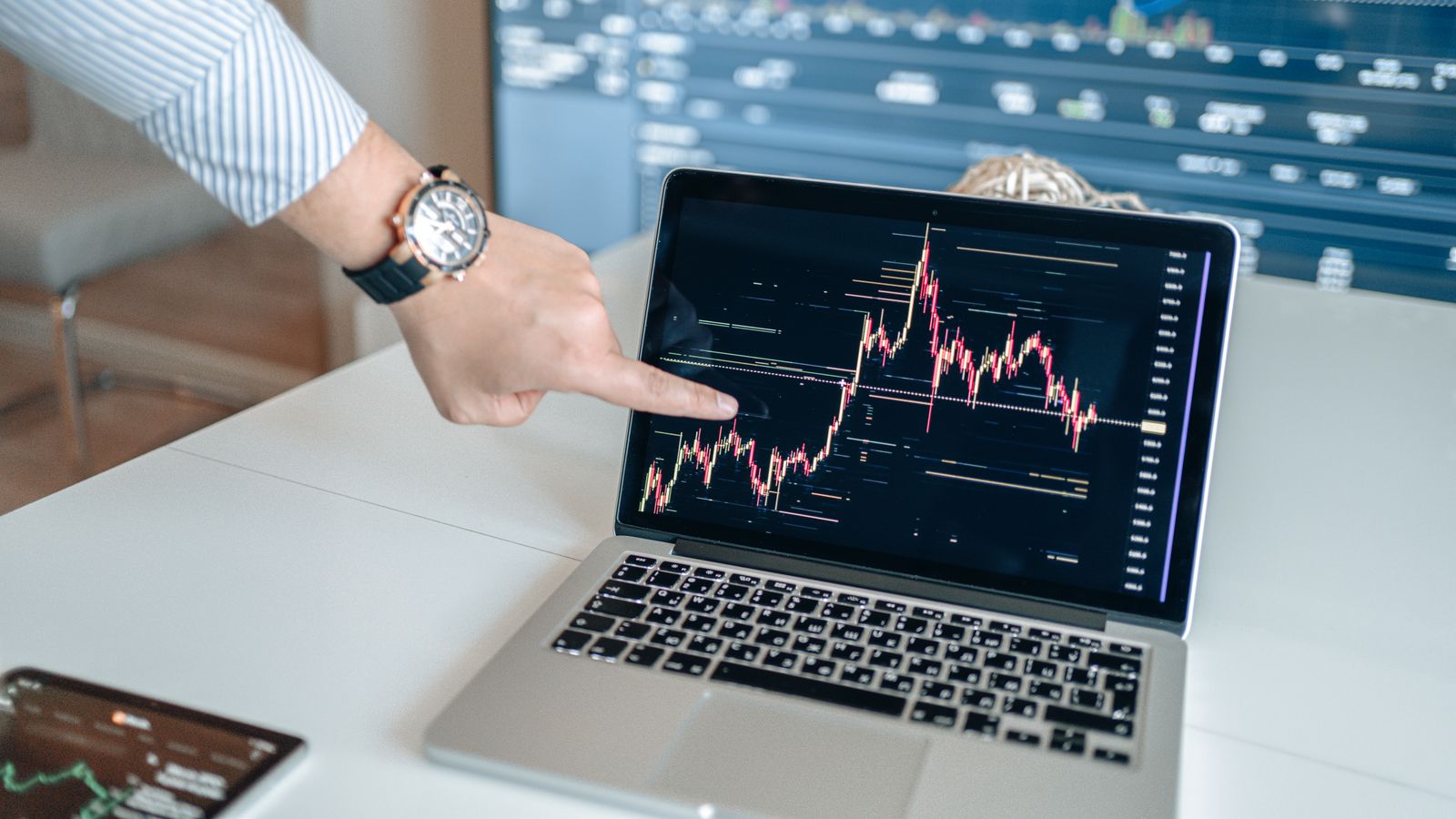
You have finally built up some savings beyond your emergency cushion, and someone at work, a podcast host or a relative has told you the same thing: "Just buy an index fund." It sounds reassuringly simple. Then you open a brokerage app and find hundreds of funds with near-identical names, three-letter codes, expense ratios printed to two decimal places and a choice between "mutual fund" and "ETF" that nobody bothered to explain.
The advice is mostly good. Low-cost index funds are one of the few corners of finance where the cheap, boring option has a strong track record against the expensive, clever one. But "just buy an index fund" skips the parts that decide whether it works for you: which index, what you pay, which account you hold it in, and whether you will stay put when the market drops by a third.
This guide fills in those gaps. You will learn what an index fund actually holds, how much a seemingly tiny fee costs over decades (with the arithmetic shown), what the official scorecard says about professional stock pickers, how bad the bad years can get, and a step-by-step way to start. We do not recommend specific funds: the goal is that you can judge any fund yourself.
What an index fund actually is
An index is just a list with rules. The S&P 500, for example, is a list of roughly 500 large US companies chosen by a committee and weighted by their market value, so the biggest firms make up the biggest slices. Nobody can invest in an index directly, in the same way nobody can eat a recipe. An index fund is the meal: a pooled fund that buys the securities on the list, in roughly the same proportions, and adjusts its holdings when the list changes.
The US regulator's investor bulletin on index funds describes them as mutual funds or exchange-traded funds that seek to track the returns of a market index. Because the manager is following rules rather than researching which stocks to favour, running the fund is cheaper. That is the whole trick, and it is less glamorous than it sounds: you are not trying to beat the market, you are agreeing to be the market and paying as little as possible for the privilege.
Two consequences follow. First, your result will never beat the index. After costs, it will trail it slightly; the gap is called tracking difference. Second, you will own everything on the list, the companies you admire and the ones you would never pick. That is a feature. Over long periods a small number of companies tend to produce a large share of the market's gains, and an index fund guarantees you own them, whichever they turn out to be.
Index mutual funds and ETFs: the same idea in two wrappers
You will meet index funds in two forms. An index mutual fund is bought from the fund company or through a broker, and every order is filled once a day at that day's closing price. An exchange-traded fund (ETF) holds a similar basket but trades on a stock exchange throughout the day, like a share. For someone investing a fixed amount each month and holding for years, the difference matters less than the marketing suggests. What matters more is the index being tracked and the annual cost.
Not every ETF is an index fund, and not every index fund is plain vanilla. The SEC publishes a separate warning about "non-traditional" index products that use leverage, inverse bets or custom indexes built to look clever. A beginner should be able to describe what a fund owns in one sentence. "Every large US company, weighted by size" passes the test. "Three times the daily move of a semiconductor basket" does not.
| Fund type | How it trades | What you are paying for | Typical use for a beginner |
|---|---|---|---|
| Broad index mutual fund | Once a day, at the closing price; some have minimum investments | Tracking a whole market cheaply | Automatic monthly investing, especially inside retirement plans |
| Broad index ETF | During market hours, at the market price; sometimes fractional shares | Tracking a whole market cheaply, often with very low fees | Brokerage and tax-advantaged accounts; easy to move between brokers |
| Actively managed fund | Mutual fund or ETF | A manager's attempt to beat a benchmark | Optional; higher fees make the bar harder to clear |
| Sector or thematic ETF | During market hours | A narrow slice: one industry, country or trend | A small satellite at most; concentrated risk |
| Leveraged or inverse ETF | During market hours | Magnified or opposite daily moves | Generally unsuitable for long-term holding |
| Target-date fund (often built from index funds) | Usually once a day | A ready-made mix of stocks and bonds that becomes more cautious over time | A one-fund option for retirement saving |
Why fees matter more than almost anything else you control
You cannot control what the stock market returns next year. You can control what you pay. Every fund charges an annual expense ratio, a percentage of your balance deducted quietly from the fund's assets. You never see an invoice; you just get a slightly lower return than you otherwise would.
Fund costs have been falling for decades. According to the Investment Company Institute, the average expense ratio for equity mutual funds fell from 0.43% in 2023 to 0.40% in 2024, while the average for index equity ETFs declined to 0.14%. Those are asset-weighted averages: many broad index funds charge a small fraction of that, and many active funds charge well above it.
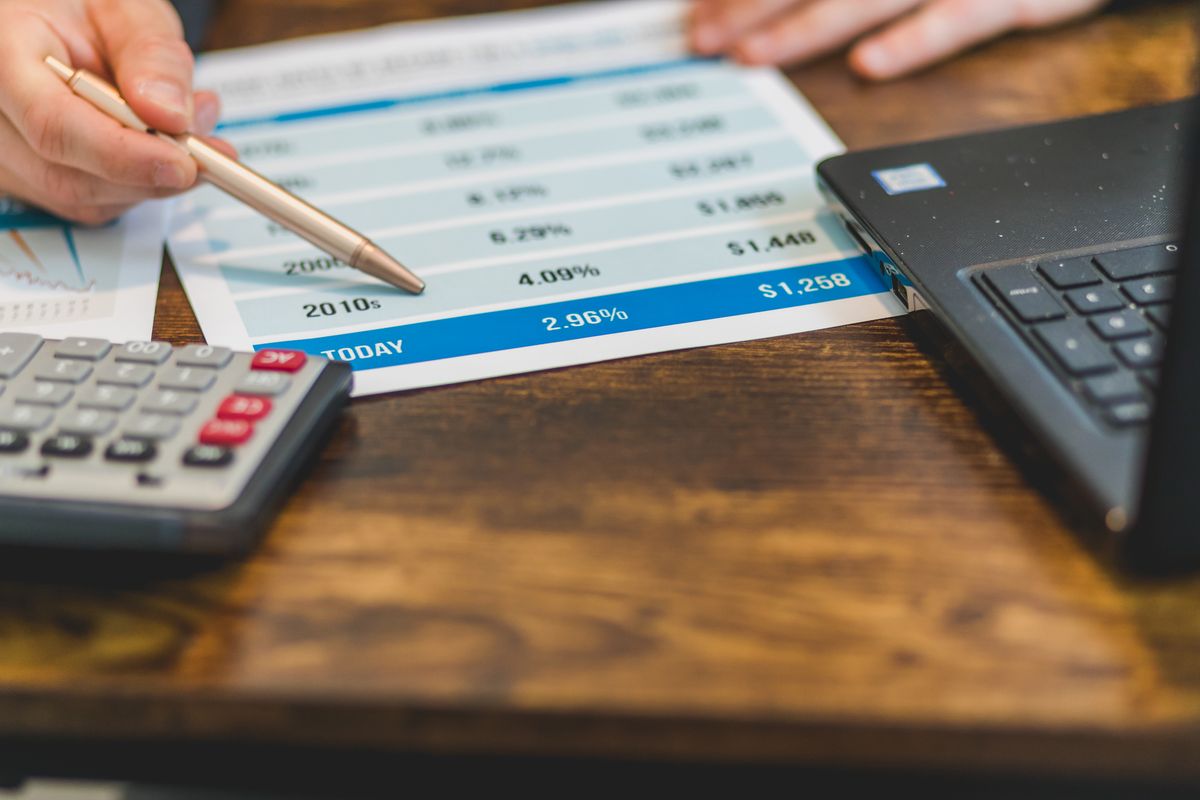
The difference between 0.05% and 1% looks like rounding error. It is not, because the fee is taken every year from a balance that keeps growing, so it compounds just as your returns do. The SEC makes the same point in its bulletin on mutual fund and ETF fees and expenses.
A worked example of fee drag
Take a single investment of $10,000 left alone for 30 years. Assume, purely for illustration, that the underlying investments earn 7% a year before fees, every year, and that the fee is simply subtracted from that return. Real markets do not move in straight lines, so treat this as a way to isolate the effect of costs, not as a forecast.
At a 0.05% fee your money grows at 6.95% a year. After 30 years that is $10,000 × 1.0695³⁰, or about $75,063. At a 1% fee it grows at 6% a year: $10,000 × 1.06³⁰, or about $57,435. Same market, same investor, same patience, and roughly $17,600 less, about 23% of the final pot, went to costs.
| Annual fee | Value after 10 years | After 20 years | After 30 years | After 40 years |
|---|---|---|---|---|
| 0.05% | $19,580 | $38,337 | $75,063 | $146,971 |
| 0.25% | $19,217 | $36,928 | $70,964 | $136,369 |
| 0.50% | $18,771 | $35,236 | $66,144 | $124,161 |
| 1.00% | $17,908 | $32,071 | $57,435 | $102,857 |
| 1.50% | $17,081 | $29,178 | $49,840 | $85,133 |
Illustrative calculation by Guide Market: $10,000 invested once, 7% annual return before fees, fees deducted from the return each year, no taxes or inflation. Not a prediction of any fund's results.
Notice how the gap widens with time. Over 10 years, the 1.5% fund trails the 0.05% fund by about $2,500. Over 40 years the gap is more than $61,000, larger than the original investment several times over. Time is the investor's best friend and, at high fees, the fund company's too.
The same logic applies to regular saving. If you put $300 a month into the same illustrative 7% market, adding $3,600 at the end of each year, after 30 years you would have about $337,000 at a 0.05% fee and about $285,000 at 1%. The extra fee costs more than $50,000, all of it coming out of money you had already earned.
Active vs passive: what the SPIVA scorecard shows
The case for paying more is that a skilled manager might beat the index by more than the extra fee. Some do, in some years. The question is whether you can identify them in advance, and whether they keep it up.
S&P Dow Jones Indices has been measuring this since 2002 in its SPIVA scorecards, which compare actively managed funds with the index that matches their style. The methodology counts funds that closed or merged along the way, which matters: poor performers often disappear quietly, and leaving them out would make the survivors look better than the average investor's experience.
The pattern in the SPIVA U.S. Scorecard Mid-Year 2025, with data to June 30, 2025, is stark once the time horizon lengthens. Over one year, 72.61% of all active large-cap US funds underperformed the S&P 500. Over 10 years the figure was 85.98%, and over 20 years it was 91.03%.
| 1 year | 72.61% |
|---|---|
| 3 years | 64.87% |
| 5 years | 86.91% |
| 10 years | 85.98% |
| 15 years | 88.29% |
| 20 years | 91.03% |
All Large-Cap Funds vs the S&P 500, absolute returns. Periods end June 30, 2025. · Source: S&P Dow Jones Indices, SPIVA U.S. Scorecard Mid-Year 2025, Report 1a
Short periods are noisy. In the first half of 2025 the same report found that only 54% of active large-cap funds lagged the index, an unusually good stretch for stock pickers.
Results are less one-sided in some corners. In the mid-year 2025 report, only 25.34% of active mid-cap funds lagged their benchmark over the first six months of the year. Yet over 20 years the mid-cap figure was 88.81%, and for small-caps 87.81%. Good spells for active managers come and go; the long-run average stays in favour of the index.
The honest counter-argument is worth stating. The scorecard compares funds with an index that has no costs, and some researchers argue that other methods of measurement flatter active managers more. A minority of funds do beat the market for long stretches. But SPIVA's separate persistence research has repeatedly found that top performers rarely stay on top, which is the practical problem: you have to pick the winner before the race, not after.
Diversification: what an index fund protects you from
Buying one company's shares is a bet on that company. Its new product might flop, its chief executive might leave, its accounts might turn out to be fiction. A broad index fund spreads your money across hundreds or thousands of companies, so the failure of any one barely registers. This is the risk an index fund removes most effectively, and it is the one beginners most often underestimate when they put their first savings into a single stock they like.
There are layers, though. An S&P 500 fund is diversified across companies but concentrated in one country's large companies, and the S&P 500 itself has become more top-heavy as a handful of technology giants have grown. A total-world index fund adds thousands of companies in other developed and emerging markets. Bond index funds add a different kind of asset that often, though not always, behaves differently from shares when stocks fall.
You do not need ten funds. Owning five overlapping US stock funds is not diversification; it is the same bet bought five times with five sets of fees. For many beginners, one or two broad funds are enough: a global or total-market stock fund, possibly paired with a bond fund, or a single target-date fund that bundles both.
Risk and drawdowns: the part the adverts leave out
An index fund removes the risk of choosing the wrong company or the wrong manager. It does not remove the risk of the market. When the whole market falls, your index fund falls with it, by design.
A drawdown is the fall from a previous peak to a low point. During the global financial crisis, the S&P 500 fell by more than half from its 2007 peak to its 2009 low. Someone with $100,000 in an S&P 500 fund at the peak would have seen less than $50,000 left at the bottom, before dividends. Shorter, sharper drops have happened since, including during the 2020 pandemic panic.
The money was only lost permanently by people who sold near the bottom and did not buy back. That is why the most important question about an index fund is not which one, but whether you can sit through a fall like that without selling. Three things help:
- Matching the money to the timeline. Money you need within the next few years, for a deposit or tuition, generally does not belong in a stock index fund at all.
- Holding some bonds or cash. A mix that includes bonds usually falls less in a stock crash, at the cost of lower expected growth.
- Deciding your rules in advance. Writing down "I will keep my monthly contribution going if the market falls 30%" sounds trivial and works surprisingly well.
How to start investing in index funds, step by step

- Check the foundations first. Pay off high-interest debt such as credit cards and keep an emergency fund in cash. A 7% expected return is not a good trade for 25% card interest, and an emergency fund stops you selling investments at a bad moment.
- Choose the account before the fund. The tax wrapper often matters more than the fund. In the US that might be a workplace 401(k), especially if your employer matches contributions, or an IRA; the IRS publishes the rules and annual limits. In the UK, a Stocks and Shares ISA shelters gains and income from tax. Other countries have their own versions. Only after that comes an ordinary taxable brokerage account.
- Pick a broad, plain index. A total-market, S&P 500 or global index is the usual core. Read the fund's description and make sure you can say in one sentence what it owns.
- Compare costs, not past returns. Two funds tracking the same index should produce almost the same returns before fees, so the cheaper one usually wins. Check the expense ratio, any account or platform fee, and trading commissions.
- Look at size and tracking. A fund with very little money in it may close. On the factsheet, compare the fund's returns with its index over several years; a small, steady gap is what you want.
- Set up an automatic contribution. A fixed amount moved on payday removes the temptation to time the market. If your broker supports it, choose automatic reinvestment of dividends.
- Decide your mix and write it down. For example, "80% global stocks, 20% bonds" or "one target-date fund". Revisit it once a year, not once a day.
- Rebalance occasionally. If one part grows far beyond your target, direct new contributions to the other part, or rebalance once a year.
Regular contributions and the case for boring
Investing the same amount every month, often called dollar-cost averaging, means you buy more fund units when prices are low and fewer when they are high. If you already hold a large lump sum, the trade-off is different: spreading it out lowers the regret of investing just before a fall, but leaves money idle while you wait. For most people the real point of a monthly direct debit is behavioural. It turns investing into a habit that does not depend on reading the news.
The best plan is one you can keep going for 20 years, through a recession, a job change and a crash. A slightly worse plan you stick with will beat a better one you abandon.
Common beginner mistakes with index funds
Most mistakes have nothing to do with choosing the wrong index. They come from behaviour, costs and complexity.
Chasing last year's winner. A sector or country fund that topped the charts last year attracts money just as its run is often ending. A broad index already owns the winners in proportion to their size.
Confusing low price per share with cheap. An ETF trading at $40 a share is not cheaper than one at $400. What you pay for is the expense ratio, not the share price.
Owning lots of overlapping funds. Three US large-cap funds from three brands mostly hold the same companies. Check the top holdings before adding a fund.
Paying a hidden layer of fees. A cheap fund inside an expensive account, or with an adviser charging 1% a year on top, is no longer cheap. Advice can be worth paying for, but know what you pay.
Trading the fund. ETFs can be bought and sold all day. That is a convenience, not an invitation. Frequent trading adds costs and taxes and usually means selling after falls.
Stopping contributions in a downturn. It feels prudent. In practice it means you stop buying exactly when units are cheapest.
Ignoring currency and home bias. If you live outside the US, a fund holding only US shares exposes you to the dollar. That may be fine, but it should be a decision, not an accident.
Frequently asked questions
Are index funds safe for beginners?
They are simple and well regulated, but not safe in the sense of a bank deposit. A stock index fund can fall by a third or more in a bad year, and your money is not guaranteed. What index funds remove is the risk of betting on a single company or a single manager. They suit money you can leave invested for many years.
What is the difference between an index fund and an ETF?
An index fund is defined by its strategy, tracking an index. An ETF is defined by how it trades, on a stock exchange during the day. Many ETFs are index funds and many index funds are mutual funds rather than ETFs. For a long-term investor the cost and the index matter more than the wrapper.
How much money do I need to start?
Often very little. Many brokers now allow fractional shares or small monthly amounts, while some mutual funds still have minimum initial investments. Check the minimums and any fixed account fees: a flat fee hurts most when the balance is small.
Can index funds lose all their money?
A broad stock index fund would only go to zero if every company in it failed at once, which is not a realistic scenario for diversified markets. Falls of more than half during severe crashes have happened, though, and narrow or leveraged funds can lose far more.
Should I pick an S&P 500 fund or a total world fund?
An S&P 500 fund concentrates on large US companies, while a total world fund spreads across many countries. Neither has a guaranteed better future. Many investors choose global funds to avoid relying on one economy; others prefer the US for its long record. Your answer depends on how much single-country concentration you are comfortable with.
How often should I check my index fund?
Rarely. Checking once or twice a year to rebalance and confirm your contributions are running is enough. Checking daily mostly increases the urge to act on short-term moves.
The takeaway
An index fund will not make you rich quickly, and it will not protect you from a crash. What it offers is a fair share of the market's long-term return at a very low cost, without needing to find the rare manager who beats it. The scorecard and the arithmetic both point the same way: costs are certain, outperformance is not.
If you are ready to start, do it in order. Sort out expensive debt and an emergency fund, choose the right account, pick one or two broad funds with low total costs, set an automatic monthly contribution and write down what you will do when the market falls. Then let the plan run, and spend your attention on the things that move the needle most: how much you save and how long you stay invested.
This article is general information, not personal financial advice.